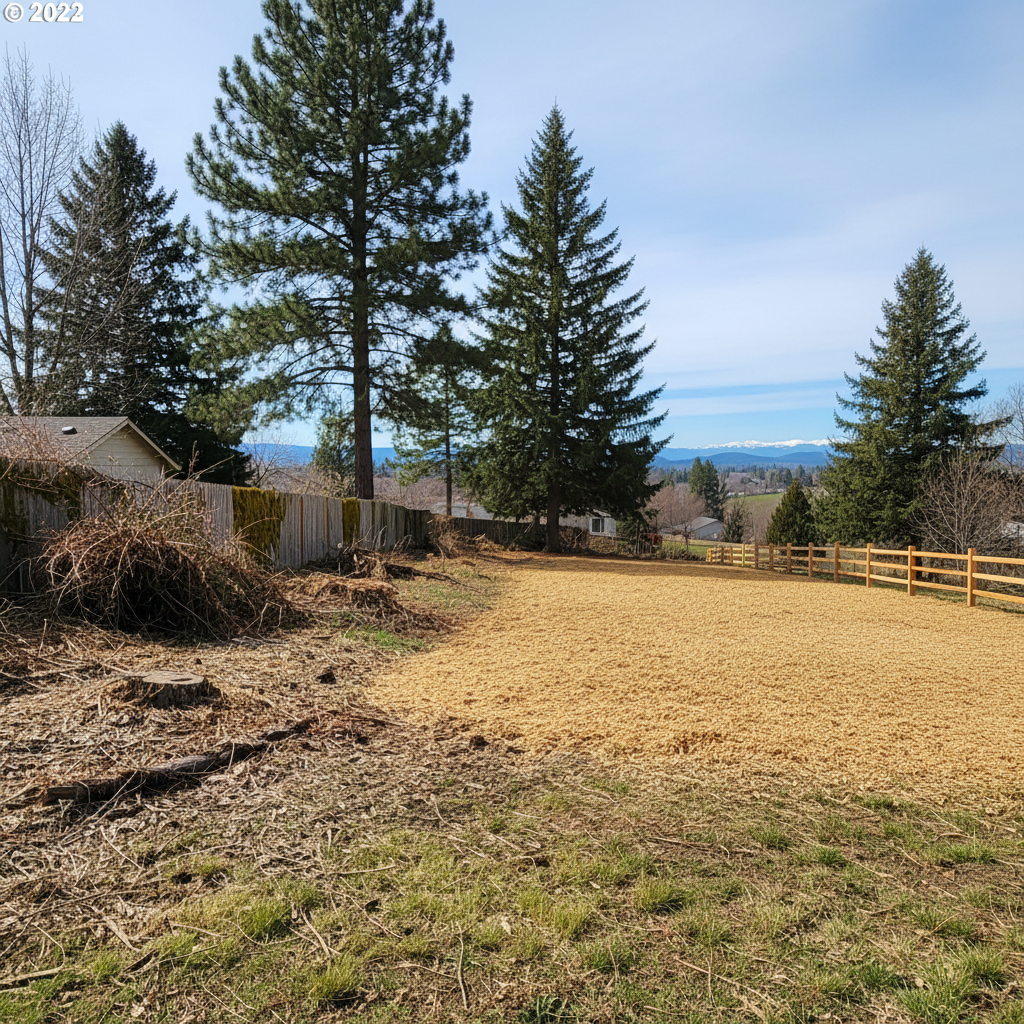
So, you've got some land you want to clear. Maybe it's an overgrown corner of your property, or you're finally ready to build that shop you've been dreaming about. Whatever the reason, you're probably looking at two main approaches: mechanical brush clearing or full-on excavation. Both get the job done, sure, but they're pretty different in how they do it and what you're left with.
What's the Difference?
When I talk about brush clearing, I'm usually talking about using specialized equipment like a skid steer with a mulching head, or even just heavy-duty brush mowers. The goal here is to cut down and grind up existing vegetation – trees, brush, small stumps – right where it stands. It turns all that organic material into mulch, leaving it on the ground. Think of it as a really aggressive haircut for your land, if you will.
Excavation, on the other hand, is a much more comprehensive process. We're talking about bringing in excavators, bulldozers, and dump trucks. This method removes everything: trees, stumps, roots, rocks, and often a layer of topsoil. It's about getting down to bare, undisturbed earth, ready for whatever comes next.
Cost: Upfront vs. Long-Term
Let's talk money, because that's usually the first thing folks ask about. Generally, brush clearing is going to be less expensive upfront. You're paying for equipment time to chew up the material, and that's it. There's no hauling away debris, no massive holes to fill, and less heavy machinery involved. It's quicker, too.
Excavation? That's a bigger investment. You're paying for more powerful equipment, more fuel, more labor, and definitely for hauling away all that waste. If we're talking about a large area or a lot of big trees, those dump truck fees add up fast. Sometimes, though, that higher upfront cost saves you headaches later, especially if you're building.
Durability & Maintenance: What Stays, What Goes
This is where the two methods really diverge. With brush clearing, you're leaving a layer of mulch. That's great for erosion control, especially on slopes, and it can even enrich the soil over time. But here's the catch: it doesn't remove the roots. That means regrowth is a real possibility, sometimes even likely, especially with persistent stuff like blackberries or certain types of brush we see around the Manastash Ridge foothills. You'll probably need to do some follow-up maintenance, whether that's herbicide application or more clearing down the road.
Excavation, because it pulls out roots and all, offers a much more durable clear. Once it's gone, it's gone. You're left with a clean slate. Maintenance for regrowth is minimal, though you might need to manage weeds that pop up in disturbed soil. The trade-off is you've got a lot of disturbed soil, which can be prone to erosion until you get some new ground cover established. This is particularly true if you're dealing with the silty, sometimes sandy, soils we have in parts of Ellensburg; heavy rain on bare excavated land can really wash things out.
Appearance & What You're Left With
After brush clearing, your land will look... mulched. It's not a perfectly smooth, level surface. You'll see stumps cut close to the ground, and a layer of chipped wood and organic debris. It's a more natural, rustic look. If you're just trying to open up a pasture or create a fire break, this might be exactly what you want.
Excavation leaves you with a much cleaner, often graded surface. It's bare earth, ready for construction, landscaping, or seeding a new lawn. If you need a perfectly level pad for a new foundation or a smooth area for a driveway, excavation is the only way to go. It gives you that blank canvas.
My Take: What's Best for Ellensburg Homeowners?
So, which one should you pick? It really boils down to your end goal.
- If you're looking to simply reclaim overgrown areas, reduce fire risk, or create a more manageable natural space without building anything major, brush clearing is often the smarter, more cost-effective choice. It's less invasive and leaves beneficial organic matter. Just be prepared for potential regrowth and plan for some follow-up.
- If you're planning any kind of construction – a house, a garage, a large shed, or even extensive hardscaping – then excavation is almost always necessary. You need that stable, root-free base. You don't want a foundation settling unevenly because a buried stump eventually rotted out, do you? It's more expensive, but it prevents much bigger problems down the line.
At Coastal Tree Inc, we handle both, and we're always happy to come out and look at your specific project. We can walk you through what each option would mean for your property and help you figure out the best path forward. Don't guess; let's get it right the first time.