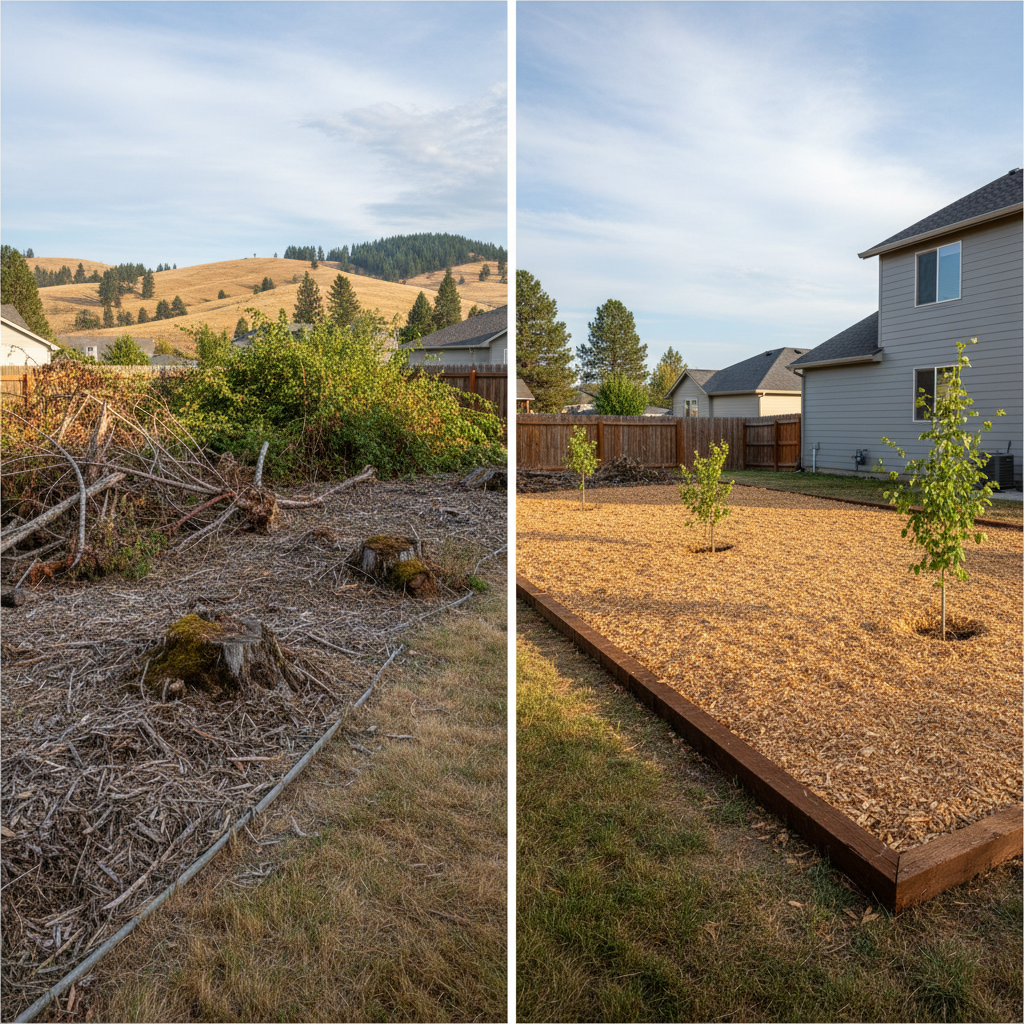
So, you've got some land in Ellensburg that needs clearing. Maybe it's for a new house, maybe for fire safety, or perhaps you just want to take back some space that's gotten totally overgrown. You're probably looking at your options, and usually, two big ones pop up: forestry mulching or what I call 'traditional' clearing. I've seen both methods used plenty around here, from the thick brush near the Yakima River to those drier, sage-covered hills north of town, and honestly, each has its place. Let's dig into what you really need to know to pick the right one for your property.
What's the Difference?
When I talk about traditional clearing, I'm generally thinking about big machines like excavators, bulldozers, and sometimes even crews with chainsaws and brush cutters. The whole idea is to get rid of the vegetation – trees, brush, stumps – and then haul it away or pile it up to burn. This often means digging out stumps, which, as you can imagine, really messes with the soil.
Forestry mulching, though, uses a special machine called, well, a forestry mulcher. It's basically a powerful tractor with a spinning drum on the front, covered in super sharp teeth. This drum grinds up trees, brush, and anything else green right where it stands, turning it all into a fine layer of wood chips and mulch. It doesn't usually pull out stumps completely, but it grinds them down to ground level or just a bit below.
Cost: What's Your Wallet Saying?
This is almost always the first thing people ask, and it's not always a simple answer. Generally speaking, forestry mulching tends to be more affordable if you're clearing big areas of dense brush and smaller trees. Why? Because it's a one-and-done operation. The machine cuts, grinds, and spreads the material all at once. You won't have separate bills for hauling away debris or those dump fees, which can really pile up, especially with our local landfill costs.
Traditional clearing can get pricey fast. You're paying for the excavator, the person running it, maybe a dozer too, then the trucks to haul everything off, and finally, those disposal fees. If you're dealing with truly massive trees or need stumps completely gone for, say, a foundation, then traditional methods might be your only choice. Just be ready for that extra expense.
Durability & Appearance: What's Left Behind?
This is where these two methods really go their separate ways. With traditional clearing, especially if you're digging out stumps, you end up with bare soil. It's clean, sure, but it's also super vulnerable to erosion. That's a real problem in our area, what with our strong winds and those occasional heavy downpours. You'll likely see a lot of disturbed earth, and it can look pretty rough for a while.
Forestry mulching, on the other hand, leaves a layer of organic material – that mulch – right on the ground. This mulch acts like a natural barrier against erosion, helps the soil hold onto moisture, and can even stop new weeds from popping up. It creates a more natural, almost park-like look pretty quickly. It's not going to be a perfectly manicured lawn, but it's a clean, even ground cover that looks good and, frankly, is great for the soil.
Maintenance: Keeping It Clear
How much work you'll have later is another big consideration. After traditional clearing, especially if the soil is bare, you'll see new growth pretty fast. Weed seeds blow in, and opportunistic plants just take over. You'll probably need to plan on reseeding or ongoing weed control to keep the area clear. And if any stumps were left, they might sprout back too.
That mulch layer from forestry mulching can actually cut down on the maintenance you'll need. It smothers a lot of weed seeds and forms a barrier against new growth. While you'll still get some regrowth eventually, it's generally slower and less aggressive than on bare soil. Plus, the organic matter breaks down over time, making your soil richer – a nice bonus if you plan to plant anything later, don't you think?
My Recommendation for Ellensburg Homeowners
For most homeowners in Ellensburg who want to clear overgrown brush, smaller trees (let's say up to 6-8 inches across), and just generally reclaim their land, I'm going to lean towards forestry mulching. It's usually more efficient, often cheaper, and leaves your land in much better shape ecologically. That mulch layer is a huge win for erosion control, especially on sloped properties or in windy spots like we have here in the Kittitas Valley.
Now, if you're building a house and need a perfectly graded, stump-free foundation area, or you've got a stand of huge Ponderosa pines that absolutely have to go, then traditional clearing with an excavator is probably your best bet. But for general land clearing, reducing fire risk, or creating defensible space, forestry mulching is a fantastic option that leaves your property looking good and healthier in the long run.
We do a lot of mulching at Coastal Tree Inc., and I've personally seen the difference it makes. If you're still not sure, just give us a call. We can walk your property with you and help figure out which approach makes the most sense for your specific needs and budget. It's all about getting the job done right and leaving you with a property you can be proud of.